
Instituto de Astrofísica e Ciências do Espaço organizes the largest world conference in Exoplanets
The conference Exoplanets 6, organized by Instituto de Astrofísica e Ciências do Espaço, will take place in Alfândega do Porto
Read more
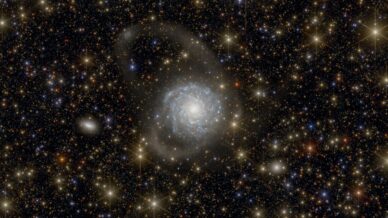
ESA adopts galactic archaeology mission
The ARRAKIHS mission, with the participation of the Instituto de Astrofísica e Ciências do Espaço, will enable Europe to lead the exploration of the low-surface-brightness Universe
Read more
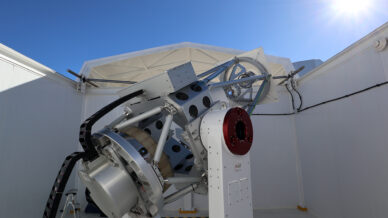
Telescope made in Portugal starts operations in Chile
A team from the Instituto de Astrofísica e Ciências do Espaço successfully concluded the installation of the first solar telescope at ESO’s Paranal Observatory. Designed to support the search for exoplanets, the PoET telescope will study the Sun with unprecedented precision, leading to further understanding how stellar activity influences the detection of worlds beyond our Solar System.
Read more
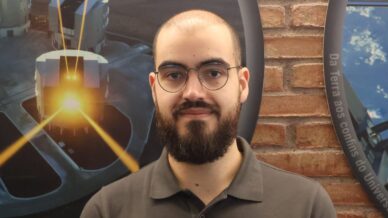
IA reseacher awarded prize by the European Astronomical Society
A researcher from the Instituto de Astrofísica e Ciências do Espaço received the MERAC Prize for the Best Doctoral Thesis in Observational Astrophysics, attributed by the European Astronomical Society
Read more
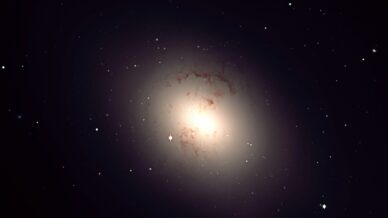
ALMA reveals that “dormant” galaxies hide more life than previously thought
An international team, including a researcher from the Institute of Astrophysics and Space Sciences (IA), has used the ALMA microwave telescope to uncover hidden reservoirs of gas and dust in inactive galaxies
Read more
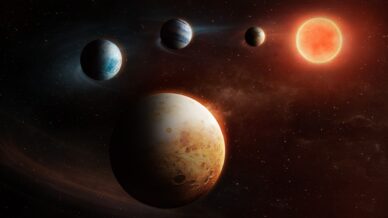
Cheops discovers a late bloomer exoplanet
A team, featuring several researchers from the Instituto de Astrofísica e Ciências do Espaço, published in the prestigious journal Science, the discovery of an exoplanet that defies current planet formation theories
Read more
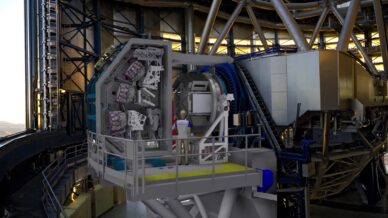
Instituto de Astrofísica e Ciências do Espaço is paving the way for research that will open new windows onto the Universe
The MOONS spectrograph, now en route to the Paranal Observatory in Chile, will use newly developed tools recently created by researchers at the Instituto de Astrofísica e Ciências do Espaço
Read more
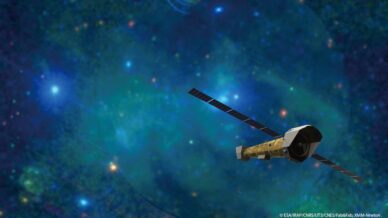
NewAthena space telescope will reveal the primordial Universe
Using modern cosmological simulations, a team led by researchers from the Instituto de Astrofísica e Ciências do Espaço (IA) has predicted that ESA’s future X-ray observatory will detect an unprecedented number of supermassive black holes at the edge of the Universe
Read more